
Quick answer
Apptunix and VLink both publish starting estimates of AED 25,000 for basic apps in Dubai. What that means for your project depends on the job the app needs to do and how your team will support it. We'd start by understanding one customer task from beginning to end, including any staff dashboard or connection to a payment or booking system that makes it work.
On this page
Compare three app scopes
The table below gives you a way to place your first release. Finding the closest scope can help you see what belongs in the brief before you compare prices.
Scroll the table to see all columns.
| Release scope | What it includes | What changes the quote |
|---|---|---|
| Basic first release | One customer task on one launch platform. Staff handle requests in an existing inbox or booking tool. | Agree on the one task, the devices to test and which steps can stay manual. |
| Customer app with staff tools | Customers submit and track requests. Staff use a small dashboard to assign work, confirm dates and update status. | Specify who can see each request, who can change it and how customers hear about changes. |
| Multi-role app with integrations | Customers, staff and managers have different access. The app exchanges data with systems such as a CRM or payment provider. | List which system owns each record, how failed updates are handled and what staff need to audit. |
If someone only needs to book once or send a request, a mobile website is worth looking at first. In NST Media’s elm at LEAP East booking project, attendees could find the right team and reserve a meeting through a website with an embedded calendar. An installed app becomes worth scoping when the job needs capabilities such as offline use or repeat access with device notifications.
Published Dubai app estimates
Apptunix’s Dubai cost guide estimates AED 25,000–40,000+ and two to three months for a basic single-platform app in its cost breakdown. VLink’s Dubai pricing guide gives AED 25,000–80,000 and two to four months for a basic first release, and AED 80,000–200,000 and four to seven months for a mid-level app.
Those are the suppliers' published estimates, while NST Media scopes each project individually. Before using the figures to judge a quote, it helps to know which platforms, staff tools, testing and launch support each supplier has included. That gives the price a scope you can compare.
What a repair request adds to the build
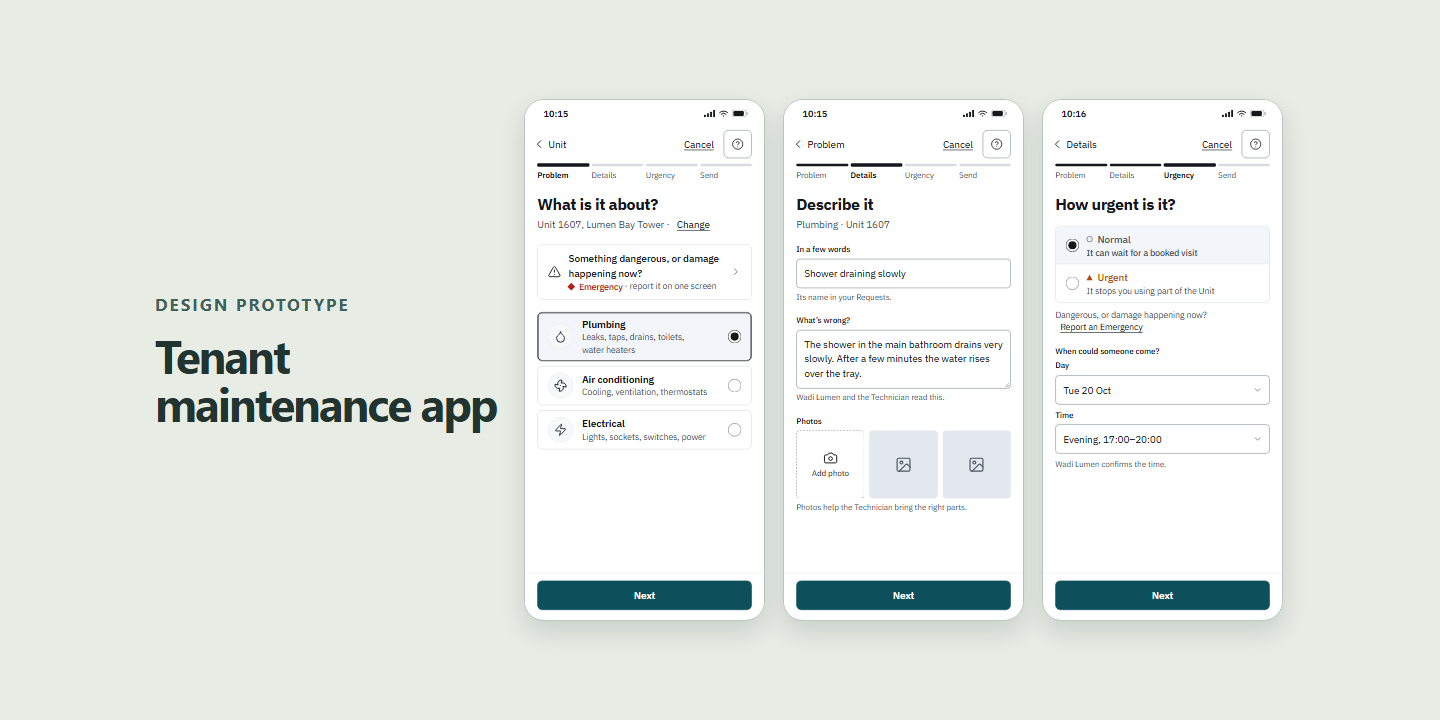
The screens above are from our tenant maintenance app prototype. Someone reporting a slow-draining shower chooses Plumbing for their unit, describes the problem, adds photos and suggests a visit window. That gets the request to the service provider, who still needs to confirm the appointment.
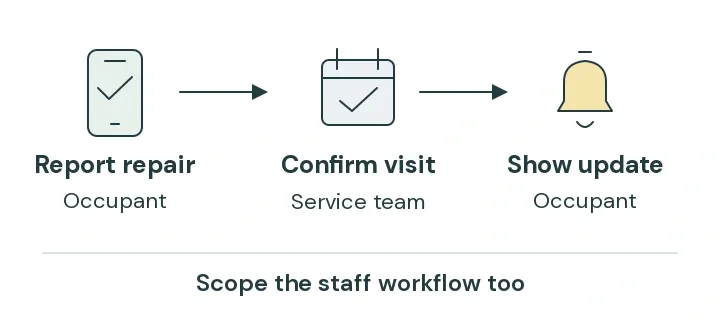
That confirmation is part of the build too. The service team needs a way to make the decision, the occupant needs to see the confirmed status, and a changed time needs to reach them. It's worth including that staff workflow in the quote from the beginning, even when the customer screens look straightforward.
The exceptions are worth talking through while the scope is still being decided. Someone with access to two units needs to know which one a request belongs to, and a failed photo upload needs an agreed response. An urgent problem may also need its own route. Working through those cases gives the team a clearer picture of what it will have to build and test.
What to put in a mobile app brief
For the first release, a useful brief follows one task from the customer's first action to the point where they know it's done. That includes the person who picks up the request behind the scenes. Where a step can stay manual at launch, making that visible helps the team scope the right amount of software.
Accounts and access deserve a conversation of their own. The team needs to understand which records each person can see and who approves that access. Thinking about someone leaving the business or moving out of a unit helps make those rules more concrete.
The devices and languages you need also shape the work. iPhone, Android and mobile web should be clear in the scope, along with things such as photo uploads and notifications. For an Arabic and English app, it's useful to hear how the team will test right-to-left layouts and translated messages on the devices people will use.
With integrations, the useful detail is what needs to happen between the app and the other system. That includes who owns the account, which data moves and what the team does when an update fails. A list of system names on its own leaves those decisions open.
The handover is another part we'd want clear before the build starts. You should know who will own the source code, developer accounts and customer data, as well as who will submit the app and respond during store review. The first release also needs an agreed route for support.
App submission and review need room in the plan as well. For iPhone, Apple’s App Review guidance explains that part of the process.
Google Play’s publishing guide covers the testing and release stages for Android.
Compare the first year in AED
For a first-year comparison, it helps to see the build and launch fee alongside hosting, support and usage charges. Two quotes are easier to judge when they cover the same first release, including the staff interface and how failed uploads or post-launch faults will be handled.
Here’s an example with illustrative figures. A quote of AED 18,000 upfront plus AED 1,200 per month comes to AED 32,400 in year one. A quote of AED 26,000 upfront plus AED 400 per month comes to AED 30,800. Both totals exclude usage fees and VAT. Ask what the monthly charge covers and which costs rise as more people use the app.
How long should you allow to launch?
A schedule becomes more useful when you can see the time allowed for scoping, design, building, testing and release. Account approvals and store review need to fit around that work too. If the app replaces an existing process, a pilot with the staff handling the requests gives you a chance to learn what needs adjusting before the first release is settled.
What to send for a scope review
To talk through an app scope, we'd start with the task you want customers to complete and how your team handles it today. Knowing the platforms that matter and your working budget helps us understand the first version you're considering. There's more about testing and store handover in NST Media’s mobile app development service.
Have an app idea to work through?
See how we approach scoping, interface design, development, testing and app store handover.
Mentioned in this article

Keep reading

What changes the cost of a business website in Sharjah?
Compare website scopes, content responsibilities and running costs. Use a sample Sharjah business brief to request a clearer website quote.

Google Ads or Meta Ads for a UAE service business?
Choose a first campaign around a customer situation, a clear service offer and an enquiry your team can follow up, with a worked planning comparison.

Your contact form says sent. Did the enquiry reach your team?
Trace a test enquiry from the form to the receiving team, using a worked worksheet for submission, delivery, inbox access and a real reply.