
Quick answer
Choose the first campaign around a specific customer situation and a measurable enquiry. A Google Search campaign is worth investigating when people already search for the service you offer. A Meta campaign may suit a proposition that needs a visual explanation or a different way to introduce the service. The decision still needs a working destination and a team ready to follow up.
For a small UAE service business, we'd begin with one offer in the area you can genuinely serve. That makes the campaign brief easier to assess than a request to “get more leads” across every service at once.
On this page
Compare a campaign, rather than two entire platforms
Google Ads includes several campaign types. This comparison focuses on Search campaigns, which Google's setup guide describes as reaching people searching for products and services. A conclusion about Search should not be applied automatically to every Google advertising format.
Meta also offers different destinations and campaign objectives. A prospect might use an instant form or visit your website, depending on the campaign. The information collected and the handover to your team will affect how useful the response is.
That is why we would put the actual offer, audience and destination in the brief. Someone comparing an office-maintenance contract needs different information from someone booking a single visit. The ad and the page should help them recognise the relevant service.
Work through one service offer
Consider a fictional maintenance company that wants enquiries for planned commercial maintenance in Sharjah. It can attend specific areas, needs to know the property type and has a staff member responsible for new enquiries. This is a planning example, not a campaign NST has run.
Scroll the table to see all columns.
| Decision | Search campaign brief | Meta campaign brief |
|---|---|---|
| Customer situation | Someone searches for the relevant maintenance service | Someone encounters a visual explanation of the maintenance offer |
| What to investigate first | Relevant queries, service area and whether the offer matches the search | Audience, creative explanation and the information needed before follow-up |
| Destination | A page explaining the service and a usable enquiry route | An appropriate page or form that carries the same promise as the creative |
| Useful business result | An enquiry the team can assess and contact | An enquiry the team can assess and contact |
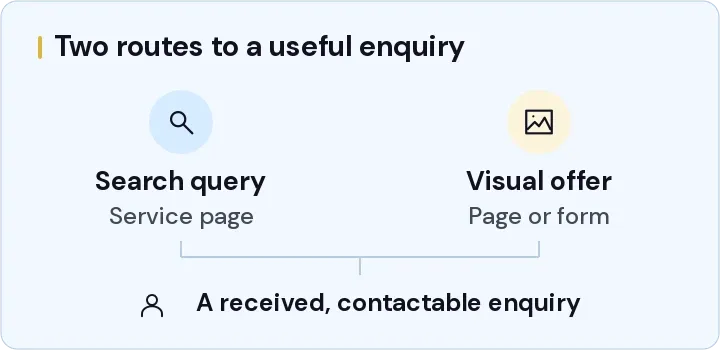
The two briefs may lead to different tests. You can start by investigating the route you can explain and operate properly. Spreading effort across platforms before the offer or follow-up is ready makes it harder to understand what needs changing.
Define a useful enquiry before measuring its cost
For this maintenance example, a useful enquiry might include a contactable person, a commercial property in the service area and a request the business can actually handle. The business should decide those criteria before anyone builds a report around form submissions.
Keep the number of received enquiries separate from the number that meet the criteria. Then record what happened after contact: a site visit, a proposal, no response or a request outside the scope. This gives a campaign review some business context without pretending every submitted form has equal value.
Agree what counts as a duplicate too. A person may submit an ad form and later send a WhatsApp message. Treating each action as a new prospect can inflate the impression of progress. The shared-enquiry ownership guide provides a way to discuss that handover.
Include the website and content in the work
Before launch, open the destination on a phone and complete the enquiry route. Confirm that the service area, wording and next step match the ad. If the form needs repair, resolve that alongside campaign setup rather than assuming more clicks will compensate for it.
A visual campaign also needs suitable creative material. Plan who provides photographs, writes the copy and approves variations. NST's content-calendar guide explains how planning and content-production support can fit together; a paid campaign brief should identify which of those assets it needs.
Set a review date and a question the test should answer. For example: are enquiries reaching the right person, and do they concern the advertised service? A useful first review can expose an offer or routing problem before anyone argues about a platform's general reputation.
What to bring to a campaign conversation
Bring the service you want to promote, where you can deliver it and the material you can publish. Existing enquiry records, with private details removed, can help describe a relevant response. If you have previous account data, keep the dates and campaign types with it.
NST offers planning and implementation support through Digital Marketing. Tell us which service you want enquiries for and how you currently handle them. We can then discuss a brief, the content required and how the response would be reviewed, without promising a fixed cost per lead or a guaranteed result.
Scope a useful first campaign
Start with the service you want to promote, the content required and how your team will review enquiries.
Keep reading

A two-week social media content calendar for a service business
Use a filled-in two-week calendar and reusable production brief to plan posts, assign approvals and scope content creation support.

How to assign WhatsApp enquiries when three people answer the inbox
Give each WhatsApp enquiry an owner, keep context when customers reply, and check shift handovers with a worked team workflow and acceptance checklist.

What changes the cost of a business website in Sharjah?
Compare website scopes, content responsibilities and running costs. Use a sample Sharjah business brief to request a clearer website quote.